Sleepy Hollow · San Anselmo · 1887–1966

The People

36 builders, owners, operators, pros, champions and landowners, each profile footnoted to the newspapers of the day. Companion to “Nine Holes on the Island.”

Owners & Founders

Operators & Staff

Players

FD
Frank DolpVisiting amateur star; 1938 exhibitionsFive-time Oregon Amateur champion who shot 69 in Sleepy Hollow's first big exhibition, July 1938.
WG
Willie GogginVisiting pro; set the 65 course record, 1938San Bruno professional whose afternoon 65 in the 1938 pro-am set the Sleepy Hollow record.
AB
Art BellVisiting pro; 1940 N.C.P.G.A. champion at Sleepy HollowSan Francisco pro who won the 1940 Northern California P.G.A. at Sleepy Hollow with a record back-nine 31.
BB
Buzz BeattieClub president, 1940; Marin Amateur medalistSleepy Hollow Golf Club president in 1940 and medalist of the Marin County Open Amateur.
BL
Byron LewisClub captain 1940; president from December 1940San Anselmo golfer who captained the Sleepy Hollow team, then became club president.
GP
George PrydzClub vice-president, 1940–41; team captainSan Anselmo golfer, Sleepy Hollow club vice-president, who captained its team at Santa Rosa.
JP
John and Matt PalacioJohn: 1940 club champion; Matt: amateur starBrothers: Matt, a state amateur champion in the 1938 exhibitions; John, the 1940 club champion.
MF
Mark FryVisiting pro; tied the course record, 1940Oakland's Sequoyah pro, twice Northern California P.G.A. champion, who shot 69 and 65 at Sleepy Hollow.
WH
William HigueraClub secretary, 1940; a former club championFairfax golfer, Sleepy Hollow club secretary in 1940, later remembered as a club champion.
BB
Bee BrownWomen's club player; North Bay vice-president, 1941Sleepy Hollow women's club stalwart, elected vice-president of the North Bay women's association in 1941.
FS
Fred ScheferSanta Rosa champion; north bay title at Sleepy HollowCaddy turned Santa Rosa club champion, whose breakthrough came at Sleepy Hollow.
FS
Freda SchraderFirst captain of the women's club; women's championSan Anselmo's leading woman golfer: women's club captain, club champion, North Bay finalist.

The Land

RH
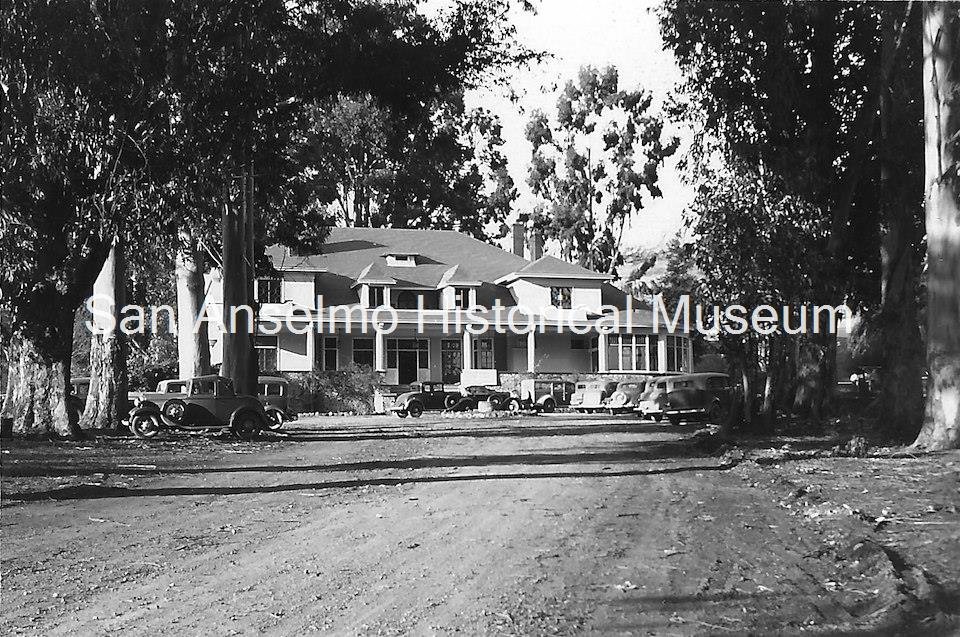
Richard M. HotalingBuilt the mansion; Sleepy Hollow's owner and host, c. 1899–1921San Francisco clubman, actor and Holstein breeder who built the mansion that became the clubhouse.
S. K. (Sig) Herzog
S. K. (Sig) HerzogSleepy Hollow Certified Dairy proprietor, c. 1906–1926; San Rafael mayorSan Rafael merchant and mayor whose model certified dairy filled Hotaling's barns for twenty years.
LH
Lavinia J. HotalingHotaling matriarch; won the ranch back from her son, 1921–24Widow of A. P. Hotaling who sued her son Richard and won Sleepy Hollow back for the family company.
WC
William Lang and the Lang Realty CompanyRealty firm: bought ranch 1925, lots 1930s, land 1943The realty firm that bought the Hotaling ranch for homesites and golf, then sold lots facing the course.
OB
O. A. Broadway (O. E. Boadway)Promoter of the 1926 'Eastern capital' resort schemePromoter who took a 1926 option on Sleepy Hollow for a hotel, golf course, polo field and lake.
Albert G. (Al) Raisch
Albert G. (Al) RaischPaving contractor; owned the Hotaling mansion from 1943Paving contractor who bought the mansion in 1943 and filled it with barbecues, Shriners and parties.
DA
David S. AdamsLang Realty tract salesman; builder; 1945 co-buyerSold Lang Realty's lots beside the fairways in 1938, then helped turn the fairways themselves into lots.
FH
Frank HealionRealtor; co-buyer of the course land, 1945Former Fairfax mayor, Kaenel's real-estate partner, and one of the three who turned the course into homesites.
AH
Anson P. HotalingDistiller; founder of the Hotaling fortuneSan Francisco whiskey merchant whose family company owned Sleepy Hollow and whose fortune the heirs fought over.
EG
Emily Shotwell GoellerMuralist; painted murals for the clubhouseSausalito painter whose murals decorated the Sleepy Hollow Golf Club, now lost with the mansion.
PD
P. H. (Porter Hall) DavisDairy manager for Hotaling, then HerzogThe dairyman who ran the Sleepy Hollow herd for Hotaling and then Herzog, and moved it to Lakeville.
WW
W. G. WeaverSan Anselmo Herald publisher; the course's champion in printHerald publisher who cheered the public links, urged the county to buy it, and mourned its plowing.

Profiles

Tap a gold number for its source · tap a photo to enlarge

Owners & Founders

H. A. "Polly" Willard

Founder and builder; majority owner, 1934–37

H. A. "Polly" Willard came to Sleepy Hollow from the San Francisco real-estate trade and the Bay Area's amateur golf circuit. In 1924 the Los Angeles Times described him as a San Francisco realty broker who had won a realtors' match on the 21st hole1. In 1927 he reached the semifinal of the Menlo Cup2, and he was medalist and "top favorite" in the Harding Park Golf Club's first championship before losing the final3. According to the MacKenzie Chronology, a 1935 San Francisco Chronicle profile called him a former figure skater, and quoted the late Dr. Alister MacKenzie saying the Sleepy Hollow ground was a course "already laid out by nature"4.

Building the course

In October 1934 the Marin Herald reported that Willard was behind a golf club on the old Sleepy Hollow ranch at the end of Butterfield Road, with options on the land and fees low enough for "any golf enthusiast"5. Within weeks he had construction under way, with E. Byrne-Cavendish in charge of the work, and the papers called him one of the best-known golfers in the state and a promoter of several Bay Area courses6,7. The size of the tract was reported variously as 350, 160 and 100 acres5,6,8. By June 1935 thirteen greens were graded9. Water was the constant worry, and Willard went to the Marin Municipal Water District more than once for better terms and more time10,11.

In April 1936 he formed Sleepy Hollow Properties, Inc., with George V. Kaenel and Charles McLaughlin; the Argus-Courier gave Willard the credit for first conceiving a "pay as you play" course there12,13. He and Kaenel opened the first nine in December 193614, and when all eighteen holes opened in April 1937 Willard was in charge of what the Mill Valley Record called a public links, "not a private club"15.

The 1937 suit

Three months later minority stockholders went to court to remove him as a director. They said he held 62.5 per cent of the stock, that the course was losing money and behind on its water bills, and that he had ignored the reforms urged by Kaenel and McLaughlin16,17. Realtor T. T. Kent took charge of the course, and Willard left for San Francisco18. In October a judge warned both sides that whoever won would lose money, and the case moved to San Francisco for settlement talks19. After that Willard drops out of the golf news. Tax rolls of the 1940s and 1950s still show land recorded in his name, including a deed from the San Anselmo Holding Corporation20,21. In 1943 the Argus-Courier remembered him as the "enthusiastic golfer and course developer" who first saw what the valley could be22.

Sources (22)
  1. Los Angeles Times, 1924-07-13 view source ↗
  2. American Golfer, 1927-09, v.30 no.12, p. 54 view source ↗
  3. American Golfer, 1927-12, v.31 no.3, p. 41 view source ↗
  4. MacKenzie Chronology (22nd rev.), 2025-01, p. 159 view source ↗
  5. “Page 4,” San Anselmo Herald, Oct. 25, 1934. view source ↗
  6. “Page 4,” Petaluma Argus-Courier, Nov. 6, 1934. view source ↗
  7. “Public Golf Course,” Mill Valley Record, Nov. 23, 1934. view source ↗
  8. “Page 1,” San Anselmo Herald, Nov. 8, 1934. view source ↗
  9. “Page 7,” Petaluma Argus-Courier, June 6, 1935. view source ↗
  10. “Water District “Not Interested” IN Sale OF Phoenix Lake,” Mill Valley Record, July 19, 1935. view source ↗
  11. “Page 3,” San Anselmo Herald, Oct. 17, 1935. view source ↗
  12. “Page 10,” Petaluma Argus-Courier, April 24, 1936. view source ↗
  13. “Public Golf Course,” Sausalito News, April 24, 1936. view source ↗
  14. “Page 4,” Petaluma Argus-Courier, Dec. 4, 1936. view source ↗
  15. “Sleepy Hollow Golf Club Opens Sat.,” Mill Valley Record, April 16, 1937. view source ↗
  16. “Page 4,” Petaluma Argus-Courier, July 17, 1937. view source ↗
  17. “Demand Removal of Golf Club Director,” Mill Valley Record, July 23, 1937. view source ↗
  18. “Page 8,” Petaluma Argus-Courier, July 20, 1937. view source ↗
  19. “Golf Club -Named in Suit,” Mill Valley Record, Oct. 8, 1937. view source ↗
  20. “Page 9 Advertisements Column 1,” Sausalito News, June 1, 1944. view source ↗
  21. “Page 5 Advertisements Column 3,” Mill Valley Record, June 2, 1950. view source ↗
  22. “Page 10,” Petaluma Argus-Courier, April 15, 1943. view source ↗
↑ All people
Owners & Founders

Charles McLaughlin

Co-incorporator and director, 1936–37

Charles McLaughlin was a San Francisco attorney who, said the Argus-Courier, had held executive posts in golf for a number of years1. In April 1936 he joined Polly Willard and George V. Kaenel as the third incorporator of Sleepy Hollow Properties, Inc., the company formed to finish and run the course2,3. The Sausalito News called him a "golf enthusiast"2.

In July 1937 the minority stockholders' complaint named him, with Kaenel, as a fellow director whose advice for putting the club on a paying footing Willard had refused4,5. After that the papers say no more of him.

Sources (5)
  1. “Page 10,” Petaluma Argus-Courier, April 24, 1936. view source ↗
  2. “Public Golf Course,” Sausalito News, April 24, 1936. view source ↗
  3. “Page 6,” San Anselmo Herald, April 30, 1936. view source ↗
  4. “Page 4,” Petaluma Argus-Courier, July 17, 1937. view source ↗
  5. “Demand Removal of Golf Club Director,” Mill Valley Record, July 23, 1937. view source ↗
↑ All people
Owners & Founders

Thomas T. Kent

Took charge of the course, July 1937

Thomas T. Kent was a prominent Marin realtor and a director of the Marin Municipal Water District1. He was probably the "Thomas T. Kent, Hawthorne" whose small water system the district had bought by 19222.

On Monday 19 July 1937, a few days after the minority stockholders sued to remove Polly Willard, Kent took charge of the golf course and clubhouse under the reorganization plan the minority hoped would give the business a fresh start1,3. The suit had said the course was behind on its water bills and that the district threatened to cut off service3. Kent reported the course open and well patronized, with more than a hundred golfers out the day before, and said the clubhouse's reopening would depend on the reorganization talks1. The papers do not record how long he stayed; by May 1938 George V. Kaenel was running the club as president4.

Sources (4)
  1. “Page 8,” Petaluma Argus-Courier, July 20, 1937. view source ↗
  2. “Attorney Harlan Replies TO MR. Moore,” Sausalito News, March 4, 1922. view source ↗
  3. “Demand Removal of Golf Club Director,” Mill Valley Record, July 23, 1937. view source ↗
  4. “Page 22,” Oakland Tribune, May 19, 1938. view source ↗
↑ All people
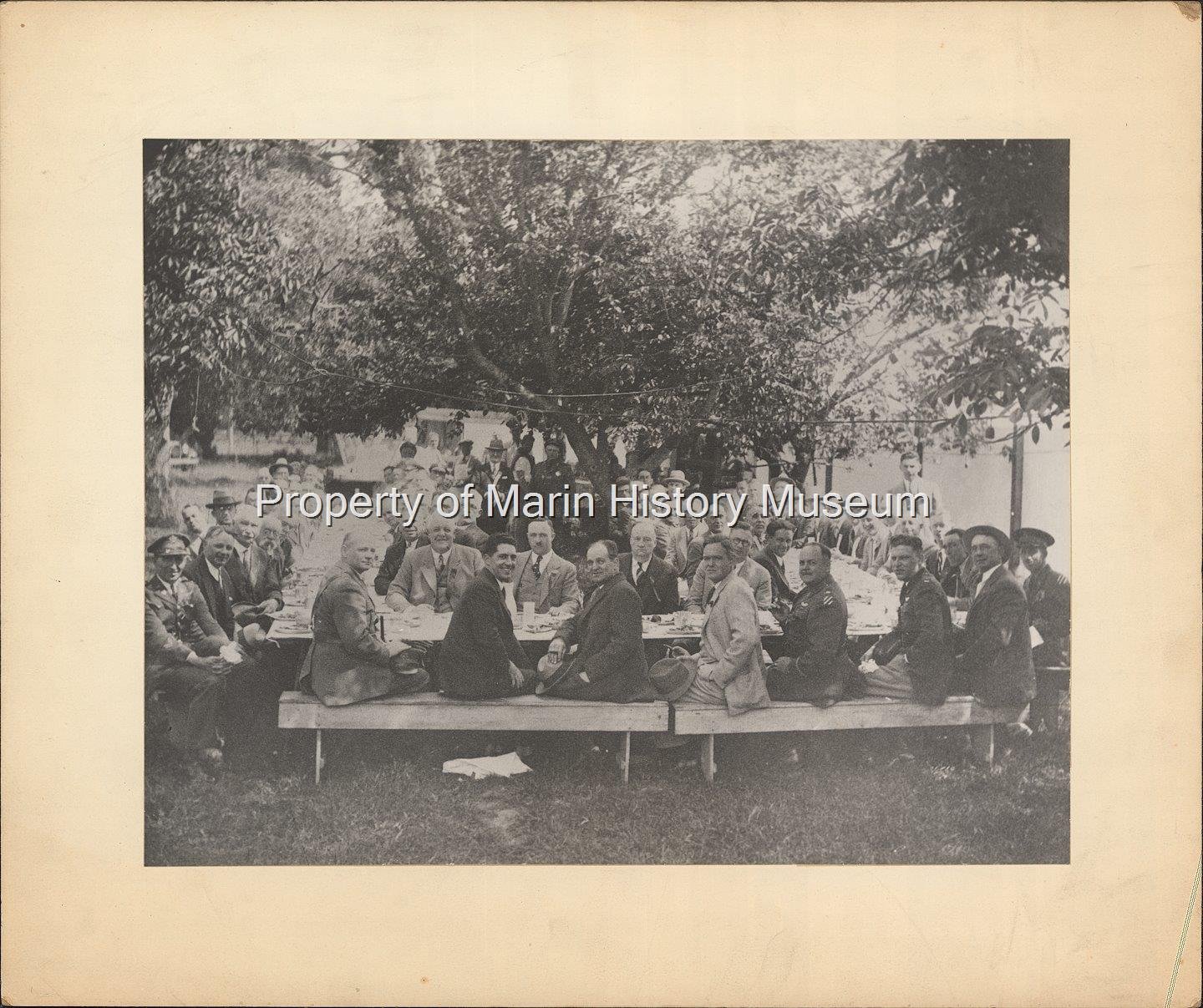
Barbeque at McNear's Ranch (George V. Kaenel among those identified). Print, Photographic. Catalog: Mounted black and white photograph of a group of 38 men, prominent local figures, politicians and miCourtesy of the Marin History Museum, Object ID P1999.464. Unaltered (catalog copy with watermark).
Owners & Founders

George V. Kaenel

Co-founder; company president, 1938–; later sold the course

George V. Kaenel was a San Rafael businessman who, by his own firm's account in 1941, had spent thirty years in Marin "in automotive, household appliance and other lines," and had once been president of the San Rafael Chamber of Commerce1. A San Rafael auto dealership called Kaenel & Becker was in the news in 1918, probably his2. He was a Lion, and a regular visitor at the San Anselmo club's luncheons3,4.

Founder and president

Kaenel became interested in Polly Willard's project some months before April 1936, when he joined Willard and Charles McLaughlin in incorporating Sleepy Hollow Properties, Inc.5,6. After the fatal brush fire of June 1936 he offered every fire department fittings to tap the course's water lines7. He was named as the operator when the driving green opened in November 1936, and he and Willard opened the first nine that December8,9. In the stockholders' suit of July 1937 he was named as a director whose advice Willard had refused10.

By May 1938 Kaenel was president of the club and the company. He hired the professional Ray de Haven, applied for the clubhouse's liquor licences, and worked with the new manager on repairs to the road and the clubhouse11,12,13. The San Anselmo Herald credited "George Kaenel and associates" with taking golf "out of the rich folks class"14. Visiting stars told him the course could become one of the most popular in the Bay Region15, and as late as September 1940 he was running the barbecue pit at a Lions party there16.

Selling the valley

In October 1941 he and Frank Healion opened the Kaenel-Healion Company, a real estate and insurance firm; the opening notice called Kaenel "one of the founders of the Sleepy Hollow Golf Club"1. In April 1943, as president of the Sleepy Hollow Investment Company, which held an option on the land, he handled the sale of the ranch around the course to Al Raisch and William Lang, and said the course itself would become homesites17,18. Two years later he, Healion and builder David Adams bought 87 acres of the old course and sold thirty lots in a week19. Kaenel-Healion was still selling new houses in Sleepy Hollow in 195520.

Sources (20)
  1. “Page 1,” San Anselmo Herald, Oct. 30, 1941. view source ↗
  2. “Brief Mentions OF General Interest,” Marin Journal, Nov. 21, 1918. view source ↗
  3. “Page 1,” San Anselmo Herald, July 16, 1936. view source ↗
  4. “Page 2,” San Anselmo Herald, Sept. 17, 1936. view source ↗
  5. “Page 10,” Petaluma Argus-Courier, April 24, 1936. view source ↗
  6. “Public Golf Course,” Sausalito News, April 24, 1936. view source ↗
  7. “Page 1,” San Anselmo Herald, July 9, 1936. view source ↗
  8. “marin week Happenings in Marin Coun.y in brief,” Mill Valley Record, Nov. 27, 1936. view source ↗
  9. “Page 4,” Petaluma Argus-Courier, Dec. 4, 1936. view source ↗
  10. “Page 4,” Petaluma Argus-Courier, July 17, 1937. view source ↗
  11. “Page 22,” Oakland Tribune, May 19, 1938. view source ↗
  12. “Page 5,” San Anselmo Herald, June 23, 1938. view source ↗
  13. “Page 7,” San Anselmo Herald, June 30, 1938. view source ↗
  14. “Page 1,” San Anselmo Herald, April 21, 1938. view source ↗
  15. “Page 1,” San Anselmo Herald, July 14, 1938. view source ↗
  16. “Page 1,” San Anselmo Herald, Sept. 26, 1940. view source ↗
  17. “Page 1,” San Anselmo Herald, April 15, 1943. view source ↗
  18. Cal. Court of Appeal (65 Cal.App.2d 75), 1944-06-26, p. 75-80 view source ↗
  19. “Page 1,” San Anselmo Herald, June 7, 1945. view source ↗
  20. “Page 4 Advertisements Column 1,” Sausalito News, April 22, 1955. view source ↗
↑ All people
Operators & Staff

E. Byrne-Cavendish

Golf architect; construction chief, 1934

E. Byrne-Cavendish (his first name never appears) was a golf architect and builder who worked with the Pasadena designer William P. Bell. When Stanford's new course opened on New Year's Day 1930, the Stanford Illustrated Review described him as Bell's associate and photographed him showing the editors around1. The Stanford yearbook said Bell, "assisted by Mr. Byrne-Cavendish, designed and constructed" the course2. A modern history of the San Francisco Golf Club says the two men finished its bunker and green rework later that year3.

In October 1934 a Sacramento columnist ranked him "just about tops" among Pacific Coast course designers, credited him with Stanford and the Bel-Air course in Los Angeles, and said he was directing construction of the new Sleepy Hollow layout4. A month later the Mill Valley Record called him a "builder of some of California's finest golf courses" and said he was in charge of construction at Sleepy Hollow for Polly Willard5. How long he stayed is not recorded; by October 1935 the papers named Willard as the man in charge of construction6.

Sources (6)
  1. https://babel.hathitrust.org/cgi/pt?id=mdp.39015080091252&seq=17 view source ↗
  2. https://babel.hathitrust.org/cgi/pt?id=mdp.39015086613059&seq=235 view source ↗
  3. GolfClubAtlas forum, modern view source ↗
  4. “Page 19,” Sacramento Union, Oct. 21, 1934. view source ↗
  5. “Public Golf Course,” Mill Valley Record, Nov. 23, 1934. view source ↗
  6. “Page 3,” San Anselmo Herald, Oct. 17, 1935. view source ↗
↑ All people
Operators & Staff

Don Taylor

Golf professional, November 1938 – April 1941

Don Taylor was Sleepy Hollow's longest-serving professional. He had been pro at the Vallejo golf club, and more recently owner and pro of the golf course at Chester, in Plumas County, when he took the Sleepy Hollow job in mid-November 1938.1,2 Within two weeks he was playing an exhibition there with Henry Espinoza against Harry Obitz and Joe Mortara.3 With Dick Fry of the PGA he arranged the northern California pro-amateur championship played on the course on 12 December 1938.4

He led the club's members in the 1939 home-and-home matches with the Petaluma Golf and Country Club. Sleepy Hollow won at home in January, and in February Taylor took twenty members to Petaluma for the return match.5,6,7 He was the pro when the golf social club was formed that month.8

By 1940 he was the course's spokesman. He talked golf to the San Anselmo Rotary Club, where the Herald said no one was better informed, and to the Fairfax Lions.9,10 He helped plan the State Open for the Northern California PGA.11 He was also general chairman of the association's 1940 championship, the first held in Marin, played at Sleepy Hollow from 26 May to 2 June.12 On his home course he qualified with 150, beat Dewey Longworth 1 up and went out to Tom LoPresti, 4 and 3.13,14 That autumn he brought the Marin County Amateur Open to Sleepy Hollow and gave a cup for its defeated eight.15,16

On 7 April 1941 Taylor became pro at the Mare Island club, in place of Harry Obitz, and his assistant, Clair Dunham, took over at Sleepy Hollow.17,18 A Don Taylor of Mare Island, very likely the same man, was elected a Northern California PGA director in February 1942.19,20

Sources (20)
  1. “Page 4,” Petaluma Argus-Courier, Nov. 15, 1938. view source ↗
  2. “Page 1,” Feather River Bulletin, Nov. 24, 1938. view source ↗
  3. “Page 8,” San Anselmo Herald, Nov. 24, 1938. view source ↗
  4. “Pro-Amateur Golf Tourney Slated For Monday,” Mill Valley Record, Dec. 9, 1938. view source ↗
  5. “Page 4,” Petaluma Argus-Courier, Jan. 16, 1939. view source ↗
  6. “Page 4,” Petaluma Argus-Courier, Feb. 24, 1939. view source ↗
  7. “Page 4,” Petaluma Argus-Courier, Feb. 27, 1939. view source ↗
  8. “Page 6,” Santa Rosa Press Democrat, Feb. 17, 1939. view source ↗
  9. “Page 1,” San Anselmo Herald, Feb. 1, 1940. view source ↗
  10. “Page 7,” San Anselmo Herald, April 18, 1940. view source ↗
  11. “Page 4,” Petaluma Argus-Courier, March 19, 1940. view source ↗
  12. “Page 30,” Oakland Tribune, May 24, 1940. view source ↗
  13. “Page 8,” San Anselmo Herald, May 30, 1940. view source ↗
  14. “Page 6,” Santa Rosa Press Democrat, June 1, 1940. view source ↗
  15. “Marin Open Golf Tourney in October,” Mill Valley Record, Sept. 17, 1940. view source ↗
  16. “Page 6,” Petaluma Argus-Courier, Oct. 9, 1940. view source ↗
  17. “Marin Golf Pro to Vallejo Links,” Mill Valley Record, April 8, 1941. view source ↗
  18. “Page 3,” Petaluma Argus-Courier, April 2, 1941. view source ↗
  19. “Page 4,” Petaluma Argus-Courier, Jan. 16, 1942. view source ↗
  20. “Page 4,” Petaluma Argus-Courier, Feb. 10, 1942. view source ↗
↑ All people
Operators & Staff

E. Boyd Stewart

Manager of course and clubhouse, 1938–39

E. Boyd Stewart came to Sleepy Hollow from the Rio Del Mar Club at Aptos, near Santa Cruz, where he had been secretary-manager for twelve years.1,2 At the end of June 1938 the club announced that it had engaged him and Mrs. Stewart, who had long experience with luncheons, banquets and receptions and would assist him.1 (One paper prints his initials as "E. E.")

Working with the company's president, George V. Kaenel, Stewart took complete charge of the property, both course and clubhouse.2,1 The road in from the end of Butterfield Road was resurfaced, and lights went up so that golfers could use the driving range and putting greens at night. The clubhouse was fitted to take parties of up to 200, and Walter Kinsler improved the dining and tap rooms.2,1 The Fourth of July weekend of 1938 brought the biggest crowd of golfers the course had yet seen, and Stewart's new seven-course dinner filled the clubhouse.3

In January 1939 he and the pro, Don Taylor, hosted the Petaluma Golf and Country Club in the first of a home-and-home series, and the Argus-Courier reported that the visitors were treated royally.4,5 He was still manager in February 1939, when a golf social club was organized at the course.6 After that the papers lose track of him.

Sources (6)
  1. “Page 7,” San Anselmo Herald, June 30, 1938. view source ↗
  2. “Sleepy Hollow Making Many Improvements New 3lanager Takes Charge of Club; Formal Reopening Soon,” Sausalito News, June 30, 1938. view source ↗
  3. “Page 1,” San Anselmo Herald, July 7, 1938. view source ↗
  4. “Page 4,” Petaluma Argus-Courier, Jan. 6, 1939. view source ↗
  5. “Page 4,” Petaluma Argus-Courier, Jan. 16, 1939. view source ↗
  6. “Page 6,” Santa Rosa Press Democrat, Feb. 17, 1939. view source ↗
↑ All people
Operators & Staff

Enrico C. Pastori

Operator of the clubhouse lodge, spring 1938

Enrico Pastori came ashore to run the clubhouse. For three years he had been chief steward on the Dollar liner President Hayes, and he was the son of the well-known restaurant owner at Pastori Station, between San Anselmo and Fairfax, whose old establishment had become the Marin School for Boys.1,2 The family had kept a popular resort there for many years, until about 1928.3

In February 1938 the San Anselmo Herald announced, under the head "Pastori Coming Ashore," that early in March he would take charge of the Hotaling mansion on the Sleepy Hollow links and run it as the Sleepy Hollow Club.1 By May he was advertising the "Sleepy Hollow Country Club Lodge": luncheons and dinners every day, and from 21 May a Saturday-night dinner dance, with music by The Serenaders, a $1.50 dinner and dancing until one in the morning.4 The Sausalito News called the lodge a growing favourite of Marin's epicures and said Pastori was carrying on his family's tradition of hospitality.3

His tenure was short. By the end of June the club had new management under E. Boyd Stewart, who promised to keep the Saturday dances going.5,6 The papers do not say why Pastori left, or where he went.

Sources (6)
  1. “Page 8,” San Anselmo Herald, Feb. 24, 1938. view source ↗
  2. “Page 4,” San Anselmo Herald, Sept. 1, 1938. view source ↗
  3. “dinner Dancina At Sleepy Hollow,” Sausalito News, May 20, 1938. view source ↗
  4. “Page 1,” San Anselmo Herald, May 19, 1938. view source ↗
  5. “Page 7,” San Anselmo Herald, June 30, 1938. view source ↗
  6. “Sleepy Hollow Making Many Improvements New 3lanager Takes Charge of Club; Formal Reopening Soon,” Sausalito News, June 30, 1938. view source ↗
↑ All people
Operators & Staff

Harold Sampson

Course adviser, 1938; NCPGA medalist at Sleepy Hollow, 1940

Harold Sampson (the papers also spell it Samson) was one of the leading professionals around the Bay. He had taught at Del Monte and Pebble Beach, where Ray de Haven served his apprenticeship under him.1 A 1940 Herald preview lists him as runner-up to Mark Fry in the 1937 Northern California PGA championship.2

In May 1938 the Sleepy Hollow Golf Club hired Sampson, then with the Burlingame Country Club, as adviser on course maintenance; he kept his Burlingame post.3 He praised the layout and promised that a few slight alterations, to begin at once, would make it one of California's outstanding courses. In his words it already had "a number of the finest golf holes I have ever seen."3 In June he was described as in charge there, telling George V. Kaenel the course was second to none in the state.4

He also taught there. In the spring of 1938 he gave a free class lesson and exhibition on the driving range, and by popular demand he gave another on the evening of 30 September, assisted by the new pro, Jim Gordon. He had just come back from a series of matches partnering Ralph Guldahl.5

In 1940 he came back as a competitor, now listed with the California Golf Club. (He is very probably the same man, though the papers never say so outright.) In the Northern California PGA championship at Sleepy Hollow he won the qualifying medal with 68–70 for 138, one stroke ahead of Art Bell, but Pat Markovich beat him on the 19th hole of the first round.6,7 In February 1942 he was elected a director of the association.8

Sources (8)
  1. “Geo. Kaenel Gets De Haven For Sleepy Hollow,” Sausalito News, May 27, 1938. view source ↗
  2. “Page 2,” San Anselmo Herald, April 25, 1940. view source ↗
  3. “Page 3,” San Anselmo Herald, May 12, 1938. view source ↗
  4. “Sleepy Hollow Now Open to Public f,” Mill Valley Record, June 17, 1938. view source ↗
  5. “Page 1,” San Anselmo Herald, Sept. 29, 1938. view source ↗
  6. “Page 8,” San Anselmo Herald, May 30, 1940. view source ↗
  7. “Page 6,” Santa Rosa Press Democrat, June 1, 1940. view source ↗
  8. “Page 4,” Petaluma Argus-Courier, Feb. 10, 1942. view source ↗
↑ All people
Operators & Staff

Ray de Haven

Golf professional, May – c. September 1938

Ray de Haven learned the game's trade under Harold Sampson at Del Monte and Pebble Beach.1,2 He went on to be the professional at a club in Fresno, at the Wawona Hotel course and at the Feather River Inn. For the two years before 1938 he assisted Larry Brazil, the teacher credited with developing Lawson Little.1,3

In mid-May 1938 George V. Kaenel, president of the Sleepy Hollow club, named de Haven professional, in charge of all golf activities, the course and the driving range included.4,5 The club's June advertisements told golfers that the course and range had reopened under new management, in fine playing condition, with de Haven in charge.6 By July the Press Democrat reported a sharp rise in interest and membership since his arrival.2

His stay was brief. By the end of September Jim Gordon was being called the new professional at Sleepy Hollow, and in November Don Taylor took the job.7,8 The papers do not say when or why de Haven left.

Sources (8)
  1. “Geo. Kaenel Gets De Haven For Sleepy Hollow,” Sausalito News, May 27, 1938. view source ↗
  2. “Page 4,” Santa Rosa Press Democrat, July 10, 1938. view source ↗
  3. “de Haven is New Golf Pro,” Mill Valley Record, May 20, 1938. view source ↗
  4. “Page 22,” Oakland Tribune, May 19, 1938. view source ↗
  5. “Page 1,” San Anselmo Herald, May 19, 1938. view source ↗
  6. “Page 1,” San Anselmo Herald, June 2, 1938. view source ↗
  7. “Page 1,” San Anselmo Herald, Sept. 29, 1938. view source ↗
  8. “Page 4,” Petaluma Argus-Courier, Nov. 15, 1938. view source ↗
↑ All people
Operators & Staff

Walter V. Lake

Clubhouse operator and manager, c. 1939–1943

Walter Lake ran the clubhouse in the old Hotaling mansion longer than anyone else. On New Year's Day 1940 he gave notice that he would sell beer, wine and spirits at the "Sleepy Hollow Country Club," at the end of Butterfield Road.1 When he left in 1943, the Herald said he had been greeting the public there for four years, so he probably arrived in 1939.2 He ran the clubhouse, and the links were a separate business: that same January George F. Finnin registered the name "Sleepy Hollow Golf Course."3

The papers call him the club's operator or manager.4,5 In September 1940 a much-searched-for four-year-old wanderer from San Anselmo turned up sitting on Lake's front steps.4 That year a San Francisco woman sued him and the club for $31,600 after a fall in the dining room on 18 May 1940. She blamed a step in the floor and poor lighting.6,7 Judge Edward I. Butler directed a verdict for Lake in November, then reversed himself in December and ordered a new trial. The outcome was not reported.8,9

Lake kept the lights on after the golf stopped. From the summer of 1942 his advertisements invited Marin to "Dine & Dance" at the Sleepy Hollow Country Club, and he threw a New Year's Eve party with a well-known dance band.10,11,12 When the Hotaling acreage was sold in April 1943, the Herald noted that he had run a clubhouse in the mansion for several years.13 He said goodbye to "Sleepy Hollow Lodge" on Saturday, 10 July 1943, and five days later opened Rancho Nicasio: twelve acres at Nicasio with a dining room, cocktail lounge, barbecue pits and picnic grounds.2,14

Sources (14)
  1. “Page 3,” San Anselmo Herald, Jan. 4, 1940. view source ↗
  2. “Page 1,” San Anselmo Herald, July 8, 1943. view source ↗
  3. “Page 3,” San Anselmo Herald, Jan. 18, 1940. view source ↗
  4. “Page 1,” San Anselmo Herald, Sept. 19, 1940. view source ↗
  5. “Damage Suit Fails To Bring $31,000,” Mill Valley Record, Nov. 22, 1940. view source ↗
  6. “Trips, Falls, Sues —Seeks $31,600,” Mill Valley Record, June 18, 1940. view source ↗
  7. “Page 8,” Petaluma Argus-Courier, Nov. 15, 1940. view source ↗
  8. “Page 10,” Petaluma Argus-Courier, Dec. 18, 1940. view source ↗
  9. “Ruling Changed In Balm Suit,” Mill Valley Record, Dec. 20, 1940. view source ↗
  10. “Page 6 Advertisements Column 3,” Mill Valley Record, June 12, 1942. view source ↗
  11. “Page 3,” San Anselmo Herald, Aug. 13, 1942. view source ↗
  12. “Page 5,” San Anselmo Herald, Dec. 17, 1942. view source ↗
  13. “Page 1,” San Anselmo Herald, April 15, 1943. view source ↗
  14. “Page 4,” San Anselmo Herald, July 8, 1943. view source ↗
↑ All people
Operators & Staff

George F. Finnin

Proprietor of the golf course business, 1940–42

George F. Finnin (the 1942 papers spell it Finnan) ran the links in the course's last years. On 15 January 1940, "residing at Sleepy Hollow Golf Course," he certified that he was doing business on his own at the end of Butterfield Road under the name "Sleepy Hollow Golf Course." The certificate was filed with the county clerk two days later and printed four times in the Herald.1,2 That was the same month Walter Lake applied for liquor licences at the clubhouse, so the course and the clubhouse were apparently run as separate businesses. The papers do not say whether Finnin leased the course or worked for its owners.3,1

He was still there in the summer of 1942. In early July, "George Finnan of Sleepy Hollow Golf course" asked $3,024.50 of J. A. Fagundes, whose cattle, he said, had strayed onto the course again and again and done serious damage.4,5 Twice he had the animals impounded under state law, and the defendants, he said, let them out at night.4 The suit is one of the last signs that anyone was still caring for the fairways. The women's weekly tournament was reported for the last time three weeks later.6 The outcome of the case was not reported.

Sources (6)
  1. “Page 3,” San Anselmo Herald, Jan. 18, 1940. view source ↗
  2. “Page 7,” San Anselmo Herald, Feb. 15, 1940. view source ↗
  3. “Page 3,” San Anselmo Herald, Jan. 4, 1940. view source ↗
  4. “Page 2,” Petaluma Argus-Courier, July 3, 1942. view source ↗
  5. “Damage Suits Filed In Marin Court,” Mill Valley Record, July 7, 1942. view source ↗
  6. “Page 4,” San Anselmo Herald, July 23, 1942. view source ↗
↑ All people
Players

Frank Dolp

Visiting amateur star; 1938 exhibitions

Frank Dolp was an amateur, not a professional, but one of the best-known golfers on the Pacific Coast. The San Anselmo Herald listed five Oregon Amateur titles, three Pacific Northwest Amateurs and two Western Amateurs.1 Just before his Marin visit he had shot 64 at Burlingame, breaking the amateur record there.1,2

On 10 July 1938 he partnered Mark Fry against Earl Fry and Matt Palacio in an 18-hole exhibition at Sleepy Hollow, with no gallery fee.3 Dolp and Mark Fry each shot 69 on the par-71 course and won 2 and 1. The Herald wrote that local golfers got "a taste of real big league putting" as Dolp holed several long putts.4,5 The players told George Kaenel the course was one of the sportiest they had played.4

The club booked him again for Labor Day, 5 September 1938, with Slim Dreier against Palacio and Rob McGlashan.6 No result has been found.

Sources (6)
  1. “Page 1,” San Anselmo Herald, July 7, 1938. view source ↗
  2. “Exhibition Matches at Sleepy Hollow Course,” Sausalito News, July 7, 1938. view source ↗
  3. “Page 11,” Oakland Tribune, July 9, 1938. view source ↗
  4. “Page 1,” San Anselmo Herald, July 14, 1938. view source ↗
  5. “Around the Redwood Empire,” Healdsburg Tribune, Enterprise and Scimitar, July 14, 1938. view source ↗
  6. “Page 1,” San Anselmo Herald, Sept. 1, 1938. view source ↗
↑ All people
Players

Willie Goggin

Visiting pro; set the 65 course record, 1938

Willie Goggin, a professional from San Bruno, had won the Northern California P.G.A. championship in 1936.1 In May 1938 he was one of two Northern California pros given an early qualifying round for the national P.G.A. because they were heading East.2

In December 1938 the Northern California Pro-Amateur championship came to Sleepy Hollow. Goggin and his amateur partner, Ed Hitzelberger, won it with best-ball rounds of 69 and 65, two strokes clear of the field.3,4 The Associated Press reported that Goggin "shot 65 alone in the afternoon round to set a new competitive course record."4 So the famous 65 was his own card, not just the team's best ball, though one paper printed only the team scores.3

The mark stood. When Mark Fry shot 65 in the 1940 Northern California P.G.A. on the same course, the wire services said he had tied "the course record of 65, set by Willie Goggin two years ago."5 Goggin had entered that championship, but his name is not among the qualifiers.6,7

Sources (7)
  1. “Page 2,” San Anselmo Herald, April 25, 1940. view source ↗
  2. “Page 22,” Oakland Tribune, May 19, 1938. view source ↗
  3. “Page 8,” Sacramento Union, Dec. 13, 1938. view source ↗
  4. “Page 32,” Oakland Tribune, Dec. 13, 1938. view source ↗
  5. “Page 4,” Santa Rosa Press Democrat, June 2, 1940. view source ↗
  6. “Page 6,” Santa Rosa Press Democrat, May 24, 1940. view source ↗
  7. “Page 8,” San Anselmo Herald, May 30, 1940. view source ↗
↑ All people
Players

Art Bell

Visiting pro; 1940 N.C.P.G.A. champion at Sleepy Hollow

Art Bell was a San Francisco professional, attached to the San Francisco Golf Club, and the 1939 California State Open champion.1,2

His great day came at Sleepy Hollow, in the 1940 Northern California P.G.A. championship. He qualified second with 69 and 70, then beat Earl Fry on the 21st hole and Harry Bassler 2 and 1.3,4 In the semifinal he was one down on the 17th when Vito Machado drove into the creek; Bell squared the match and won on the 20th.5

In the 36-hole final on 2 June 1940 he trailed the defending champion, Mark Fry, by a stroke at lunch, 70 to 68.1 In the afternoon he came home in 31, which the papers called a new record for the course's back nine.6,7 He closed out the match 3 and 2 on the 185-yard sixteenth, holing a 14-foot putt for a two.6 His afternoon round was a five-under-par 66.1 As the Oakland Tribune put it, "Art Bell's putter was hotter than the day."6

Sources (7)
  1. “Page 8,” San Anselmo Herald, June 6, 1940. view source ↗
  2. “Page 4,” Petaluma Argus-Courier, March 19, 1940. view source ↗
  3. “Page 8,” San Anselmo Herald, May 30, 1940. view source ↗
  4. “Page 6,” Santa Rosa Press Democrat, June 1, 1940. view source ↗
  5. “Page 12,” Oakland Tribune, June 2, 1940. view source ↗
  6. “Page 11,” Oakland Tribune, June 3, 1940. view source ↗
  7. “Art Bell Wins Pga Golf Title Here,” Mill Valley Record, June 7, 1940. view source ↗
↑ All people
Players

Buzz Beattie

Club president, 1940; Marin Amateur medalist

Buzz Beattie (the papers never give his first name) was president of the Sleepy Hollow Golf Club for about a year until December 1940, when Byron Lewis succeeded him.1

He was also one of the club's best players. In October 1940 the Marin County Open Amateur was played at Sleepy Hollow, and Beattie led the qualifiers with a 71, par for the course.2 He was the favorite, but Walter Rossi of Petaluma beat him 6 and 5 in the quarter-finals.3

Beattie played in the club's team matches with Petaluma in 1940 and 1941.4,5 At the club's annual dinner in the clubhouse in May 1941 he headed the list of prize-winners.6

Sources (6)
  1. “Page 4,” Petaluma Argus-Courier, Dec. 12, 1940. view source ↗
  2. “Page 6,” Petaluma Argus-Courier, Oct. 9, 1940. view source ↗
  3. “Page 4,” Petaluma Argus-Courier, Oct. 19, 1940. view source ↗
  4. “Page 3,” Petaluma Argus-Courier, Nov. 19, 1940. view source ↗
  5. “Page 7,” Petaluma Argus-Courier, June 30, 1941. view source ↗
  6. “Page 2,” San Anselmo Herald, May 22, 1941. view source ↗
↑ All people
Players

Byron Lewis

Club captain 1940; president from December 1940

Byron Lewis of San Anselmo was captain of the Sleepy Hollow Golf Club in 1940.1,2 He led its team in a home-and-home series with the Petaluma Golf and Country Club. Sleepy Hollow won the first leg on its own course in June 1940.3 At Petaluma that November the hilly course beat the visitors badly.4

Lewis was a strong match player who kept meeting John Palacio. Palacio beat him 5 and 4 in the semifinal of the 1940 Marin County Open Amateur at Sleepy Hollow.5 A month later Palacio beat him again, 8 and 7 over 36 holes, in the final of the club championship.6

In December 1940 Lewis was elected president of the club, with George Prydz as vice-president.1 In 1941 he won a prize at the annual dinner, and he tied for low net in the American Trust Company's tournament at Sonoma.7,8

Sources (8)
  1. “Page 4,” Petaluma Argus-Courier, Dec. 12, 1940. view source ↗
  2. “Page 4,” Petaluma Argus-Courier, Nov. 15, 1940. view source ↗
  3. “Page 4,” Petaluma Argus-Courier, Nov. 16, 1940. view source ↗
  4. “Page 3,” Petaluma Argus-Courier, Nov. 19, 1940. view source ↗
  5. “Sabin and Palacio In Golf Finals,” Mill Valley Record, Oct. 25, 1940. view source ↗
  6. “Page 1,” San Anselmo Herald, Nov. 28, 1940. view source ↗
  7. “Page 2,” San Anselmo Herald, May 22, 1941. view source ↗
  8. “Page 4,” Petaluma Argus-Courier, June 4, 1941. view source ↗
↑ All people
Players

George Prydz

Club vice-president, 1940–41; team captain

George Prydz of San Anselmo was elected vice-president of the Sleepy Hollow Golf Club in December 1940, under president Byron Lewis.1 He played in the 1940 Marin County Open Amateur and in the club's matches with Petaluma.2,3 In June 1941 he captained the Sleepy Hollow team at the Santa Rosa Golf and Country Club, which lost narrowly, 19 matches to 21. A return match at Sleepy Hollow was arranged for later that year.4

Sources (4)
  1. “Page 4,” Petaluma Argus-Courier, Dec. 12, 1940. view source ↗
  2. “Page 4,” Petaluma Argus-Courier, Oct. 19, 1940. view source ↗
  3. “Page 3,” Petaluma Argus-Courier, Nov. 19, 1940. view source ↗
  4. “Page 4,” Santa Rosa Press Democrat, June 24, 1941. view source ↗
↑ All people
Players

John and Matt Palacio

John: 1940 club champion; Matt: amateur star

Matt (or Mat) Palacio Jr. of San Rafael was Marin's best-known amateur golfer. He was the 1936 State Amateur champion and in 1938 the Northern California Amateur champion.1,2 The Herald called him "old man accuracy himself."2 In 1941 the Oakland Tribune identified him as a San Rafael cigar salesman.3

Matt carried Marin's colours in Sleepy Hollow's first big exhibition, on 10 July 1938. Partnered with the professional Earl Fry, he lost 2 and 1 to Frank Dolp and Mark Fry.4 He was booked again for a Labor Day match that September.1

His brother John Palacio played out of the Sleepy Hollow Golf Club. In October 1940 John reached the 36-hole final of the Marin County Open Amateur on the course; the result has not been found.5 On 24 November 1940 he became Sleepy Hollow's club champion, beating Byron Lewis 8 and 7 over 36 holes.6 He received the trophy at the club meeting in December.7

Sources (7)
  1. “Page 1,” San Anselmo Herald, Sept. 1, 1938. view source ↗
  2. “Page 1,” San Anselmo Herald, July 7, 1938. view source ↗
  3. “Page 29,” Oakland Tribune, Feb. 7, 1941. view source ↗
  4. “Page 1,” San Anselmo Herald, July 14, 1938. view source ↗
  5. “Sabin and Palacio In Golf Finals,” Mill Valley Record, Oct. 25, 1940. view source ↗
  6. “Page 1,” San Anselmo Herald, Nov. 28, 1940. view source ↗
  7. “Page 4,” Petaluma Argus-Courier, Dec. 12, 1940. view source ↗
↑ All people
Players

Mark Fry

Visiting pro; tied the course record, 1940

Mark Fry, professional at Sequoyah Country Club in Oakland, was the best known of a golfing family: his brothers Earl and Dick were pros at Alameda and Lake Chabot.1 He won the Northern California P.G.A. in 1937 and 1939 and had been its medalist six times in seven years.2 The San Anselmo Herald called him "Northern California's No. 1 Golfer."3

He came to Sleepy Hollow for an exhibition on 10 July 1938, partnering the amateur Frank Dolp against his brother Earl and Matt Palacio.3 Fry and Dolp each shot 69 on the par-71 course and won 2 and 1.4,5 That December he and Milton Ross tied for second in the Northern California Pro-Amateur on the course.6

Fry returned as defending champion for the 1940 Northern California P.G.A., the first played in Marin.7 He qualified with 70 and 73, including the day's best nine, a 33.8 In the semifinal on 1 June he shot 65 to beat Tommy LoPresti, tying what the papers called Willie Goggin's course record.9,10 The next day he led Art Bell by a stroke after a morning 68, but Bell's afternoon charge beat him 3 and 2.11,12

Sources (12)
  1. “Page 30,” Oakland Tribune, May 24, 1940. view source ↗
  2. “Page 2,” San Anselmo Herald, April 25, 1940. view source ↗
  3. “Page 1,” San Anselmo Herald, July 7, 1938. view source ↗
  4. “Page 1,” San Anselmo Herald, July 14, 1938. view source ↗
  5. “Around the Redwood Empire,” Healdsburg Tribune, Enterprise and Scimitar, July 14, 1938. view source ↗
  6. “Page 32,” Oakland Tribune, Dec. 13, 1938. view source ↗
  7. “Page 13,” Oakland Tribune, May 26, 1940. view source ↗
  8. “Page 8,” San Anselmo Herald, May 30, 1940. view source ↗
  9. “Page 4,” Santa Rosa Press Democrat, June 2, 1940. view source ↗
  10. “Page 12,” Oakland Tribune, June 2, 1940. view source ↗
  11. “Page 8,” San Anselmo Herald, June 6, 1940. view source ↗
  12. “Page 11,” Oakland Tribune, June 3, 1940. view source ↗
↑ All people
Players

William Higuera

Club secretary, 1940; a former club champion

Bill Higuera was secretary of the Sleepy Hollow Golf Club in 1940. When new officers were chosen that December he handed the job to Paul Streck and took over the club's publicity.1 He played in the club's team matches against Petaluma, winning his match on the home course in June 1941.2,3

In 1943, after the course had closed, the Mill Valley Record described "William Higuera, former Sleepy Hollow golf club champion," of Fairfax.4 It does not say when he won. John Palacio was champion in 1940, so Higuera's title probably came in another year.5

Sources (5)
  1. “Page 4,” Petaluma Argus-Courier, Dec. 12, 1940. view source ↗
  2. “Page 3,” Petaluma Argus-Courier, Nov. 19, 1940. view source ↗
  3. “Page 7,” Petaluma Argus-Courier, June 30, 1941. view source ↗
  4. “A 1 Nelson Wins Over Higuera (Contributed),” Mill Valley Record, Nov. 11, 1943. view source ↗
  5. “Page 1,” San Anselmo Herald, Nov. 28, 1940. view source ↗
↑ All people
Players

Bee Brown

Women's club player; North Bay vice-president, 1941

Bee (or Bea) Brown was a mainstay of the Sleepy Hollow women's team in the North Bay Women's Golf Association. She was probably the "Mrs. Max E. Brown" of Sleepy Hollow named in the same reports.1

She tied for low net in Class A at Healdsburg in November 1940.2 When the association met at Sleepy Hollow in May 1941 she won a special prize as a member of the hostess club.3 In the North Bay championship that October she qualified for the championship flight and reached the final of the defeated flight.4,5 In November 1941 the association elected her vice-president.6 At Napa in March 1942, as the wartime tire shortage began to cut the schedule, she was second low net in Class A.1

Sources (6)
  1. “Page 10,” Santa Rosa Press Democrat, March 13, 1942. view source ↗
  2. “Page 3,” Santa Rosa Press Democrat, Nov. 16, 1940. view source ↗
  3. “Page 8,” Santa Rosa Press Democrat, May 21, 1941. view source ↗
  4. “Page 10,” Santa Rosa Press Democrat, Oct. 3, 1941. view source ↗
  5. “Page 10,” Santa Rosa Press Democrat, Oct. 10, 1941. view source ↗
  6. “Page 10,” Santa Rosa Press Democrat, Nov. 6, 1941. view source ↗
↑ All people
Players

Fred Schefer

Santa Rosa champion; north bay title at Sleepy Hollow

Fred Schefer rose "from caddy" to become the perennial champion of the Santa Rosa Golf and Country Club, which he won every year from 1937.1,2,3

According to the Santa Rosa Press Democrat in 1939, his breakthrough was a "spectacular victory" in championship play at Sleepy Hollow that made him north bay counties champion.1 The paper dated it "three years ago", which would be before the full course opened in 1937, so the date is probably loose. No report of the event itself has been found.

Schefer returned to the course on 21 September 1941, at the head of a 20-man Santa Rosa team, for the return leg of that year's home-and-home matches with the Sleepy Hollow Golf Club.4

Sources (4)
  1. “Page 6,” Santa Rosa Press Democrat, June 4, 1939. view source ↗
  2. “Page 4,” Santa Rosa Press Democrat, June 2, 1940. view source ↗
  3. “Page 6,” Santa Rosa Press Democrat, June 15, 1941. view source ↗
  4. “Page 4,” Santa Rosa Press Democrat, Sept. 20, 1941. view source ↗
↑ All people
Players

Freda Schrader

First captain of the women's club; women's champion

Freda Schrader of San Anselmo (the papers spell her Freda, Frieda or Freida, and Schrader or Shrader) was the leading woman golfer at Sleepy Hollow.1 When the Sleepy Hollow Women's Golf Club was formed at a dinner at the course in October 1939, with 25 members, "Mrs. Frank Schrader" was elected captain and so its president. Tuesday became ladies' day.2

By October 1940 she was being called women's champion of both Sleepy Hollow and the Marin courses.1 That month she reached the semifinal of the North Bay women's championship at Sonoma, losing at the 20th hole.1

On 20 May 1941 the North Bay Women's Golf Association played at Sleepy Hollow, and she won the tournament on her home course with the low score in Class A. The visitors then lunched in the clubhouse.3,4 That October she reached the 36-hole North Bay final at Sonoma, losing to Margaret Risdon of Santa Rosa.5,6 In November the association elected her rules chairman.7 She was still playing North Bay events in the spring of 1942.8

Sources (8)
  1. “Page 8,” Santa Rosa Press Democrat, Oct. 9, 1940. view source ↗
  2. “Page 8,” Petaluma Argus-Courier, Oct. 27, 1939. view source ↗
  3. “Page 8,” Santa Rosa Press Democrat, May 21, 1941. view source ↗
  4. “Page 4,” Petaluma Argus-Courier, May 22, 1941. view source ↗
  5. “Page 8,” Santa Rosa Press Democrat, Oct. 8, 1941. view source ↗
  6. “Page 10,” Santa Rosa Press Democrat, Oct. 10, 1941. view source ↗
  7. “Page 10,” Santa Rosa Press Democrat, Nov. 6, 1941. view source ↗
  8. “Page 10,” Santa Rosa Press Democrat, March 13, 1942. view source ↗
↑ All people
The Land

Richard M. Hotaling

Built the mansion; Sleepy Hollow's owner and host, c. 1899–1921 · c. 1868–1925

Richard M. "Dick" Hotaling was the son of pioneer San Francisco parents, the liquor merchant Anson P. Hotaling and his wife Lavinia, and heir to one of the city's great fortunes.1,2 He made his name as a bon vivant, an amateur Shakespearean actor and a playwright: he was in the cast of every Bohemian Grove play for some twenty years and wrote the 1918 Grove play, "The Twilight of the Kings."1,2

The country place

The family company's ranch above San Anselmo, once called the Dutton ranch, became his country place.3 His Holstein herd of fifty arrived about October 1899, and in December 1900, while he sat on the San Francisco Board of Supervisors, he was reported to be "erecting a spacious residence on the 'Sleepy Hollow' tract," with a bath to every suite, a fountain on the lawn and a trout lake.4,5 A Santa Cruz paper later credited the architect E. L. Van Cleeck with the "magnificent residence and stables," at a cost of more than $60,000, though a 1901 contract for a ranch house there names a different architect.6,7

Hotaling loved the place. He described its 1,600 acres as "like a gigantic amphitheater," knew each of his cows by a pet name, and hung a dozen tuned Swiss bells on the herd.4,8 His Holsteins won prizes at the 1904 State Fair, and a cow he bred became "the grand old cow of the University Farm."9,10 His house parties were famous; guests were sometimes ordered to dress for dinner in costumes improvised from the curtains, and a Santa Cruz columnist wrote that local people who had seen Sleepy Hollow said "it has few equals."11,12

About 1906 he rented the ranch to the Herzogs of San Rafael and sold them the cattle, which led to S. K. Herzog's certified dairy; Hotaling kept the house, renovated it in 1914 with murals by Ferdinand Burgdorf, and in 1915 told visiting milk commissioners the ranch's history.13,14,15

The family lawsuits

In 1898–99 the directors of the family company (his mother, his brother Fred and Richard himself) signed a deed of the ranch to Richard. He recorded it in 1916; his mother and brother said it had never been meant for recording.16,17 His mother sued. In a letter read in court he wrote that he held the ranch in trust for his late brother Anson's children, and refused, "in all respect and gentleness," to give it up.18 He lost in every court: in April 1921 Judge Edward I. Butler voided the deed because Richard had voted as a director for his own benefit, and in March 1924 the Supreme Court vested title in the Hotaling Estate Company.19,20 A 1925 compromise divided the estate in four equal shares, and the ranch was sold that summer.2,21

He never married.2 He died in San Francisco on 14 November 1925, aged 57, after pneumonia and influenza, and left his fortune to his niece and nephew, the children of his brother Anson.22,2,23 His house lived on as the golf course's clubhouse until it burned in 1957.24

Also appears in
Sources (24)
  1. “Page 1,” Santa Rosa Press Democrat, Nov. 15, 1925. view source ↗
  2. “Page 1,” Santa Rosa Press Democrat, Jan. 6, 1929. view source ↗
  3. “Around The Bay Region 4.,” Mill Valley Record, Nov. 20, 1920. view source ↗
  4. “Sleepy Hollow Ranch.,” Pacific Rural Press, April 30, 1904. view source ↗
  5. “Marin County Items.,” Marin Journal, Dec. 27, 1900. view source ↗
  6. “Page 1,” Santa Cruz Surf, May 11, 1907. view source ↗
  7. “Instruments Filed AT San Rafael,” Sausalito News, Nov. 2, 1901. view source ↗
  8. “AN Ideal Ranch IS "Sleepy Hallow.",” Marin Journal, Jan. 1, 1903. view source ↗
  9. “Local News Happenings,” Marin County Tocsin, Sept. 10, 1904. view source ↗
  10. “Sleepy Hollow Ranch Herd Famous,” Marin County Tocsin, May 20, 1916. view source ↗
  11. “Society's Summer Outing,” San Francisco Call, July 13, 1902. view source ↗
  12. “Page 3,” Evening Sentinel (Santa Cruz), June 28, 1904. view source ↗
  13. “Sleepy Hollow Certified Dairy.,” Pacific Rural Press, May 25, 1912. view source ↗
  14. ““Storaehedge” Is Bismantied,” San Francisco Call, Nov. 7, 1914. view source ↗
  15. “Mayor Herzog Entertains National Milk Men. Spend morning on Tanialpais and Have Grand Barbecue at His Sleepy Hollow Ranch in the Afternoon.,” Mill Valley Record, June 26, 1915. view source ↗
  16. “Hotaling Trial Comes To Close,” Marin Journal, Dec. 2, 1920. view source ↗
  17. “Mrs. Hotaling Wins Sleepy Hollow Suit,” Marin Journal, May 5, 1921. view source ↗
  18. “Spri*s Letter Tells Claim *.*'• • • • O Upon Ranch,” San Francisco Call, Nov. 30, 1920. view source ↗
  19. “Hotaling Loses $250,000 Ranch,” Sacramento Union, May 1, 1921. view source ↗
  20. “Page 2,” Oakland Tribune, March 13, 1924. view source ↗
  21. “Page 7,” Santa Rosa Press Democrat, July 22, 1925. view source ↗
  22. “Page 1,” Oakland Tribune, Nov. 15, 1925. view source ↗
  23. “Page 1,” Santa Rosa Press Democrat, Nov. 19, 1925. view source ↗
  24. “Page 1,” Petaluma Argus-Courier, Feb. 18, 1957. view source ↗
↑ All people
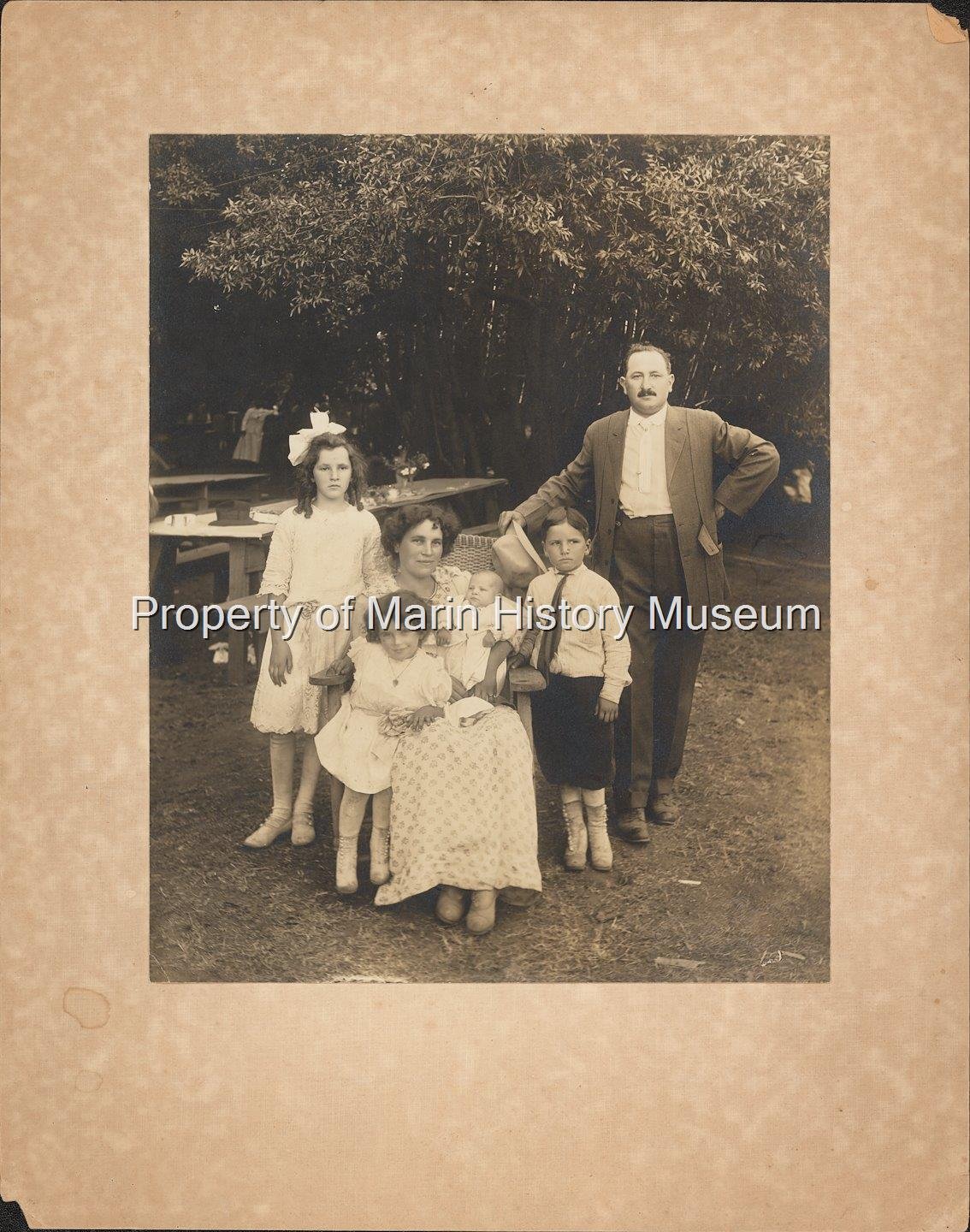
Herzog family outdoors. Print, Photographic. Catalog: Mounted sepia tone portrait of the family of Sigfried Kramer Sr. and Rebecca Herzog, including their four children: Aileen, Max, Leta, and SigfrieCourtesy of the Marin History Museum, Object ID 2008.16.17. Unaltered (catalog copy with watermark).
The Land

S. K. (Sig) Herzog

Sleepy Hollow Certified Dairy proprietor, c. 1906–1926; San Rafael mayor

S. K. "Sig" Herzog was a San Rafael merchant who became the valley's dairyman.1 By September 1909 his family was summering at Sleepy Hollow, "their summer place a few miles from here."2 Later accounts dated his tenancy from about 1905 or 1906.3,4

According to the Pacific Rural Press in 1912, Richard Hotaling decided to rent the ranch and sell his cattle, and "a deal was made with Messrs. Herzog of San Rafael."5 Herzog first tried to run it with cheap help and lost $3,000 in a year. He then brought back Hotaling's old manager, Mr. Davis, and set up a certified dairy, with tuberculin-tested cows, concrete-floored barns whitewashed four times a year, a hospital barn, and milkers in clean suits.5 In 1911 the S. K. Herzog Co. contracted to sell Sleepy Hollow certified milk through Ideal Farms.6

Herzog was a showman. On Marin County Day at the 1915 Panama-Pacific Exposition he and a score of helpers poured free Sleepy Hollow milk for the crowds in sanitary cups.7 That spring he was elected mayor of San Rafael.1,8 In June he gave a barbecue at the ranch for some 300 members of the American Association of Medical Milk Commissioners. "Mayor S. K. Herzog is some entertainer," one paper wrote.8,9 In 1917, when the draft took his ranch hands, he hired two San Anselmo women for his haypress crew at $3 a day.10

In July 1925 the Hotaling estate's sale of the ranch to Lang Realty brought Herzog notice to vacate. His herd then numbered about 300 cows.11,3 Unable to find suitable land in Marin, in October 1926 he bought the 2,200-acre Roseland ranch near Lakeville in Sonoma County, and the dairy moved there, name and all.4,12 Later notices about the "Sleepy Hollow" dairy refer to that Lakeville ranch, which he owned jointly with his manager P. H. Davis by 1935.13

Also appears in
Sources (13)
  1. “The Candidates Have Circulated Petitions,” Marin Journal, March 11, 1915. view source ↗
  2. “In the Social Circle,” Marin Journal, Sept. 16, 1909. view source ↗
  3. “Page 1,” San Anselmo Herald, July 24, 1925. view source ↗
  4. “Page 4,” Petaluma Argus-Courier, Oct. 15, 1926. view source ↗
  5. “Sleepy Hollow Certified Dairy.,” Pacific Rural Press, May 25, 1912. view source ↗
  6. “Miscellaneous Records,” Marin County Tocsin, June 17, 1911. view source ↗
  7. “"Marin County Day" Draws Thousands TO Exposition And California Building,” Marin County Tocsin, March 13, 1915. view source ↗
  8. “Mayor S. K. Herzog TO Give Monster Barbecue,” Mill Valley Record, June 19, 1915. view source ↗
  9. “Mayor Herzog Entertains National Milk Men. Spend morning on Tanialpais and Have Grand Barbecue at His Sleepy Hollow Ranch in the Afternoon.,” Mill Valley Record, June 26, 1915. view source ↗
  10. “Pretty Novato Girl IS Charming Bride,” Marin Journal, Sept. 13, 1917. view source ↗
  11. “Page 7,” Santa Rosa Press Democrat, July 22, 1925. view source ↗
  12. “Marin County Agriculture Sleepy Hollow Dairy Goes to Sonoma County,” Mill Valley Record, Oct. 9, 1926. view source ↗
  13. “Page 7,” Santa Rosa Press Democrat, May 25, 1935. view source ↗
↑ All people
The Land

Lavinia J. Hotaling

Hotaling matriarch; won the ranch back from her son, 1921–24 · c. 1845–1929

Lavinia J. Hotaling was the widow of Anson P. Hotaling, the San Francisco distiller whose estate was put at four to five million dollars, and the mother of four sons, among them Richard and Frederick.1,2 She was president of the A. P. Hotaling Company, the family corporation that owned the Sleepy Hollow ranch, and she held a quarter share of the Hotaling Estate Company.3,4

In 1898–99 she and her son Fred, as directors, signed a deed of the ranch to Richard. She said it was only a safeguard, never to be recorded, in case her widowed daughter-in-law Ella married a German nobleman; Richard said it was a gift.5,6 When he recorded the deed and kept her estate stock, she went to law in 1918, in San Francisco for the stock and in Marin for the ranch.7,8 At 74 she took the witness stand against her son.1

She won both suits. Judge John Hunt restored her stock in November 1919, a decision affirmed by the Supreme Court in 1922.5,7 The Marin trial over the ranch ran from November to December 1920 before Judge Edward I. Butler. She closed it with a flat denial that she had ever said Richard should have Sleepy Hollow.9 On 30 April 1921 Butler voided the deed.10 In March 1924 the Supreme Court vested title in the Hotaling Estate Company, whose directors included Lavinia and Fred, and that June she was awarded possession of the ranch.11,12

A compromise in 1925 divided the estate equally among Lavinia, Richard, Fred and Ella, and in July the ranch was reported sold to the Lang Realty Company.2,13 Richard's will, filed that November, left her nothing. It observed that she already had "ample fortunes."14 She died in San Francisco on 5 January 1929, aged 83.2

Sources (14)
  1. “Page 1,” Napa Journal, Aug. 6, 1919. view source ↗
  2. “Page 1,” Santa Rosa Press Democrat, Jan. 6, 1929. view source ↗
  3. “Battle Opens For Hotaling Ranch,” Marin Journal, Nov. 11, 1920. view source ↗
  4. “IS. Hqtaling IS Shocked B¥ Son's Word,” San Francisco Call, Aug. 7, 1919. view source ↗
  5. ““Dick” Totaling Loses $1,000,000 Suit TO Mother Judge Hun! Restores Shire IH Fortune,” San Francisco Call, Nov. 17, 1919. view source ↗
  6. “Hotalings Reveal Family Quarrels,” Marin Journal, Nov. 25, 1920. view source ↗
  7. “Mother Victorious IN Hotaling Case,” Sausalito News, Jan. 14, 1922. view source ↗
  8. “Brief Mentions OF General Interest,” Marin Journal, Nov. 21, 1918. view source ↗
  9. “Hotaling Trial Comes To Close,” Marin Journal, Dec. 2, 1920. view source ↗
  10. “Hotaling Loses $250,000 Ranch,” Sacramento Union, May 1, 1921. view source ↗
  11. “Page 1,” Santa Rosa Press Democrat, March 14, 1924. view source ↗
  12. “Page 2,” Petaluma Daily Morning Courier, June 24, 1924. view source ↗
  13. “Page 7,” Santa Rosa Press Democrat, July 22, 1925. view source ↗
  14. “Page 1,” Santa Rosa Press Democrat, Nov. 19, 1925. view source ↗
↑ All people
The Land

William Lang and the Lang Realty Company

Realty firm: bought ranch 1925, lots 1930s, land 1943

The Lang Realty Company, "of San Francisco and San Anselmo," turned the Hotaling ranch into real estate.1 In July 1925 it was reported to have bought the ranch from the Hotaling Estate Company, 1,600 acres for $250,000 by one account and 1,560 acres for "nearly $200,000" by another.2,1 The firm planned five-acre homesites around "golf links and club house in the center."1 The deal closed in September, a golf course was to be laid out at once, and early in October the constructor John Clarke broke ground.3,4

The firm soon looked for bigger partners. In July 1926 it was negotiating to sell 1,100 acres to an "Eastern syndicate" for a resort hotel "on the order of Del Monte," keeping 500 acres for homesites.5 A trade paper reported that O. A. Broadway had taken an option "through Lang Realty."6 In November 1927 the San Anselmo Herald still described the ranch as Lang property, when the firm lent a big barn for the Presbyterian Orphanage boys' Halloween party.7

The grand schemes failed, but Lang kept selling lots. In 1938 its Sleepy Hollow tract, managed by David S. Adams, sold building sites "fronting on the beautiful Sleepy Hollow Golf Course," and its advertisements promised "You Can Play Where YOU LIVE."8,9 In April 1943, with the course closed, William Lang and Al G. Raisch bought 1,154 acres of the ranch for $67,500, leaving out the golf course. Lang planned to cut his share into tracts of a half acre to ten acres.10,11

The papers are not consistent about which Lang was the buyer. One 1943 report names August Lang, a Marin realtor, and a 1952 retrospective says Walter.12,13

Also appears in
Sources (13)
  1. “Page 1,” San Anselmo Herald, July 24, 1925. view source ↗
  2. “Page 7,” Santa Rosa Press Democrat, July 22, 1925. view source ↗
  3. “New Suburban Development,” Mill Valley Record, Sept. 26, 1925. view source ↗
  4. “Page 18,” Santa Rosa Press Democrat, Oct. 4, 1925. view source ↗
  5. “Page 1,” San Anselmo Herald, July 27, 1926. view source ↗
  6. https://books.google.com/books?id=fmdKODO__agC&pg=RA10-PA12 view source ↗
  7. “Page 3,” San Anselmo Herald, Nov. 4, 1927. view source ↗
  8. “Page 3,” San Anselmo Herald, May 5, 1938. view source ↗
  9. “Page 2,” San Anselmo Herald, Aug. 11, 1938. view source ↗
  10. “Page 1,” San Anselmo Herald, April 15, 1943. view source ↗
  11. “Page 10,” Petaluma Argus-Courier, April 15, 1943. view source ↗
  12. “Page 5,” Santa Rosa Press Democrat, April 15, 1943. view source ↗
  13. San Rafael Independent-Journal, 1952-09-20, Marin Magazine, p. M15-M16 view source ↗
↑ All people
The Land

O. A. Broadway (O. E. Boadway)

Promoter of the 1926 'Eastern capital' resort scheme

In late August 1926 a San Francisco building journal reported that "O. A. Broadway, representing Eastern capital," had taken an option through Lang Realty on the 1,600-acre Sleepy Hollow tract.1 He planned to spend $2,000,000 on a $500,000 hotel, a golf course, a polo field and an artificial lake for boating and bathing, all financed by a million-dollar bond issue.1 A month earlier the San Anselmo Herald had reported the same kind of plan from an unnamed "Eastern syndicate," with a 200-room hotel, a 25-acre lake and golf courses.2

The name is probably a misprint for Boadway. In December 1927 Bernardo Ariasi sued "O. E. Boadway, president of the Boadway-Rivinino Co., a Nevada corporation," alleging that Boadway had induced him to deed over his Novato ranch by saying that the company owned the Sleepy Hollow ranch. Ariasi said he then learned it belonged to one Walter Graf.3 The suit was an allegation, and our sources do not report how it ended.

An Odber Earl Boadway lived in Sausalito in the late 1930s, probably the same man. In June 1938 his daughter Leslie's wedding reception was held at the Sleepy Hollow Country Club, the old Hotaling mansion, by then the golf clubhouse.4,5

Sources (5)
  1. https://books.google.com/books?id=fmdKODO__agC&pg=RA10-PA12 view source ↗
  2. “Page 1,” San Anselmo Herald, July 27, 1926. view source ↗
  3. “Page 1,” San Anselmo Herald, Dec. 9, 1927. view source ↗
  4. “! ST. Anselm’s Church Roadway-L. F. Aregc,” Sausalito News, May 27, 1938. view source ↗
  5. “t Leslie BO AD Way Marries Leonard li Aregger AT ST. Anselmo’s Church >,” Sausalito News, June 9, 1938. view source ↗
↑ All people
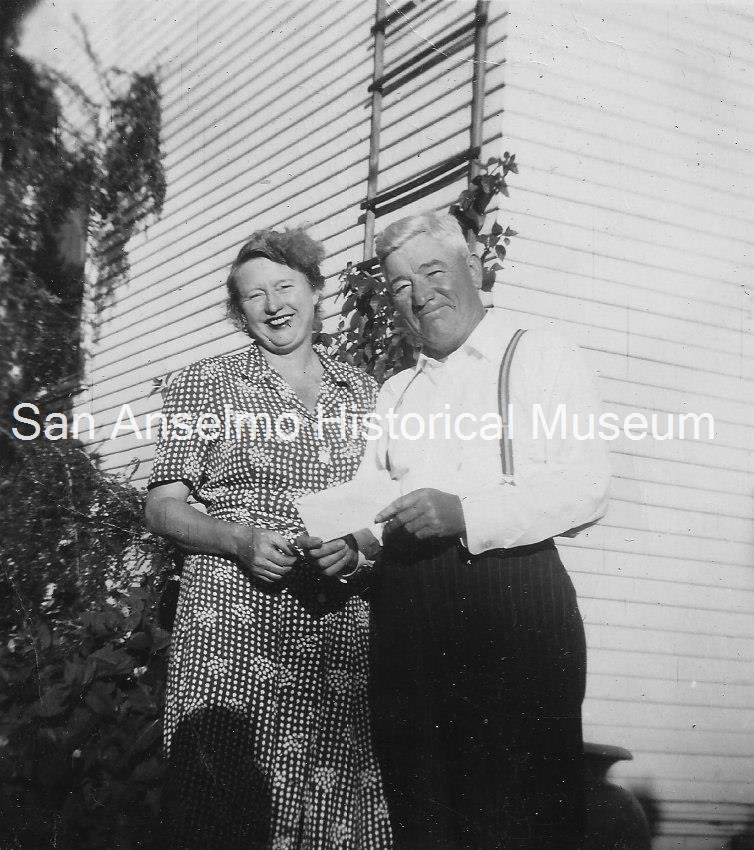
Katherine and Albert Raisch. Print, Photographic. Catalog: Albert G. Raisch, a paving contractor, and his wife, Katherine, purchased the upper 512 acres of Sleepy Hollow in 1943. The Raisches moved inCourtesy of the San Anselmo Historical Museum, Catalog No. 2069. Unaltered (catalog copy with watermark).
The Land

Albert G. (Al) Raisch

Paving contractor; owned the Hotaling mansion from 1943

Al G. Raisch ran a paving firm, the Al G. Raisch Co.1,2 In April 1943, with the golf course closed, he and William Lang bought 1,154 acres of the old Hotaling ranch for $67,500. The 100-acre golf course itself was not part of the sale.3,1 Raisch's share, for $50,000, was the Hotaling mansion, then still the golf clubhouse, with several hundred acres of hill and valley around it. He planned to remodel the house for his family, an Argus-Courier writer said, "carrying out some of the original dreams of the late Richard Hotaling."1 The sale was contested: two dairymen, the Smith brothers, claimed an earlier agreement to buy much of the land, and their suit went to the Court of Appeal.4,5

The Raisches moved into the big house and made it a place for crowds again.6 In September 1945 about 480 employees and associates of the firm came to his annual barbecue in the grove behind the house.2 In May 1948 some 3,000 Shriners paraded through San Rafael and then went out to "Al Raisch's Sleepy Hollow Ranch" for an outdoor ceremonial and barbecue.7 His daughter's wedding was held at the ranch in June 1949, and in 1954 the Raisches lent the house and grounds for Humane Society benefits.8,9,10

A 1952 visitor described the changes. The shingles had been stained white, the private stable was gone, and a swimming pool curved along the wide cement porch.6 Early on 17 February 1957 fire destroyed the 18-room mansion. The papers we have do not say whether the Raisches still lived there.11

Also appears in
Sources (11)
  1. “Page 10,” Petaluma Argus-Courier, April 15, 1943. view source ↗
  2. “Page 6,” San Anselmo Herald, Sept. 6, 1945. view source ↗
  3. “Page 1,” San Anselmo Herald, April 15, 1943. view source ↗
  4. “Page 8,” Petaluma Argus-Courier, June 3, 1943. view source ↗
  5. Cal. Court of Appeal (65 Cal.App.2d 75), 1944-06-26, p. 75-80 view source ↗
  6. San Rafael Independent-Journal, 1952-09-20, Marin Magazine, p. M15-M16 view source ↗
  7. “Page 8,” Santa Rosa Press Democrat, May 9, 1948. view source ↗
  8. “Page 12,” Santa Rosa Press Democrat, July 8, 1949. view source ↗
  9. “Handknit Style Show,” Sausalito News, June 18, 1954. view source ↗
  10. “Barbecue to Benefit Humane Auxiliary,” Mill Valley Record, Oct. 14, 1954. view source ↗
  11. “Page 1,” Petaluma Argus-Courier, Feb. 18, 1957. view source ↗
↑ All people
The Land

David S. Adams

Lang Realty tract salesman; builder; 1945 co-buyer

David S. Adams sold Sleepy Hollow before he built it. In January 1938 he and his wife entertained at their Mexican-style home in Sleepy Hollow Acres, where he was the tract's sales manager1. That spring, as sales manager of Lang Realty's Sleepy Hollow Tract, he reported selling one- and two-acre building sites fronting the golf course to San Francisco physicians2. His tract office offered acre sites at $650 an acre3, and that summer ran Lang Realty's "You Can Play Where You Live" advertisements, which made the course the selling point4,5.

By 1945 the Herald called him a San Anselmo builder. With George V. Kaenel and Frank Healion he bought 87 acres of the former course at the end of May that year, and thirty homesites were sold within a week6.

Also appears in
Sources (6)
  1. “Page 5,” San Anselmo Herald, Jan. 20, 1938. view source ↗
  2. “Page 3,” San Anselmo Herald, May 5, 1938. view source ↗
  3. “Page 3,” San Anselmo Herald, May 12, 1938. view source ↗
  4. “Page 2,” San Anselmo Herald, Aug. 11, 1938. view source ↗
  5. “Page 5,” San Anselmo Herald, Aug. 25, 1938. view source ↗
  6. “Page 1,” San Anselmo Herald, June 7, 1945. view source ↗
↑ All people
The Land

Frank Healion

Realtor; co-buyer of the course land, 1945

Frank Healion had been in business in Fairfax for many years, had served on its town council and as its mayor, and was a charter member of the Fairfax Lions Club1. In October 1941 he and George V. Kaenel opened the Kaenel-Healion Company, a real estate and insurance office in San Rafael1; the firm was still listed in the state's 1948 directory of brokers2.

At the end of May 1945 Healion, Kaenel and builder David Adams bought 87 acres of the former Sleepy Hollow golf course for $91,000 from the Sleepy Hollow Investment Company3. Within a week they had sold thirty homesites, five of them to doctors, with lots of at least 15,000 square feet and 100-foot frontages3. A decade later Kaenel-Healion was still advertising new houses and lots in Sleepy Hollow4,5.

Sources (5)
  1. “Page 1,” San Anselmo Herald, Oct. 30, 1941. view source ↗
  2. https://books.google.com/books?id=B90qPpy2AtQC view source ↗
  3. “Page 1,” San Anselmo Herald, June 7, 1945. view source ↗
  4. “Page 4 Advertisements Column 1,” Sausalito News, April 22, 1955. view source ↗
  5. “Page 5 Advertisements Column 1,” Sausalito News, Aug. 26, 1955. view source ↗
↑ All people
The Land

Anson P. Hotaling

Distiller; founder of the Hotaling fortune

Anson P. Hotaling was a San Francisco distiller and liquor merchant, and the founder of the Hotaling fortune. The papers of 1919–24 call him a "millionaire distiller" and say that the family estate grew from the liquor business.1,2 He left an estate variously reckoned at four and five million dollars.3,4 In Marin he founded the A. P. Hotaling Bank in San Rafael, later succeeded by the Bank of San Rafael, and in Santa Cruz he built the Hotaling building.5,6 He and his wife Lavinia had four sons: Anson Jr., George, Richard and Frederick.4

Sleepy Hollow, earlier known as the Dutton ranch, was held by the A. P. Hotaling Company, the family corporation. In 1898–99 its directors deeded the ranch to Richard, and in 1904 the company's property passed to the Hotaling Estate Company.7,8 The newspapers do not say when or from whom the ranch was acquired. Local histories give dates from 1878 to 1889, and none is confirmed here.

Even his death date is uncertain in the papers. Richard testified that the father was still alive when the deed was signed in November 1898, while Lavinia said her husband and eldest son were both dead by then.9,10 By 1904 he was spoken of as having "passed to the other world."6 His heirs spent most of the 1920s in court over what he left.4

Sources (10)
  1. “Mother Victorious IN Hotaling Case,” Sausalito News, Jan. 14, 1922. view source ↗
  2. “Page 22,” Oakland Tribune, March 23, 1924. view source ↗
  3. “Page 1,” Napa Journal, Aug. 6, 1919. view source ↗
  4. “Page 1,” Santa Rosa Press Democrat, Jan. 6, 1929. view source ↗
  5. “Hotalings Reveal Family Quarrels,” Marin Journal, Nov. 25, 1920. view source ↗
  6. “Page 3,” Evening Sentinel (Santa Cruz), June 28, 1904. view source ↗
  7. “Around The Bay Region 4.,” Mill Valley Record, Nov. 20, 1920. view source ↗
  8. “Battle Opens For Hotaling Ranch,” Marin Journal, Nov. 11, 1920. view source ↗
  9. “UfdfiD Homing IN Clash With Attorney Special Dispatch to The Call.,” San Francisco Call, Nov. 29, 1920. view source ↗
  10. “Claim ON Ranch • IS Denied BL Mrs. Hotaling D • • – • * ’CQAoiaJ Dfspatch to The Oall.,” San Francisco Call, Nov. 24, 1920. view source ↗
↑ All people
The Land

Emily Shotwell Goeller

Muralist; painted murals for the clubhouse · 1887–1965

Emily Shotwell Goeller (1887–1965), who worked in the 1930s as Shotwell Goeller-Wood, was a California painter and muralist1. The 1937–38 Who's Who in American Art lists her at Sausalito, with a fresco in the San Mateo Park School auditorium and "Murals, Sleepy Hollow Golf Club, San Anselmo, Calif."2. Edan Hughes's Artists in California gives the same list1. The murals were presumably painted for the remodelled Hotaling mansion when it became the clubhouse, about 1936–37. No newspaper describes them, and they were probably lost when the mansion burned in 1957.

In November 1935 she showed work in the first exhibition of the Marin Society of Artists at the Outdoor Art Club in Mill Valley3. Two years later, as president of the San Francisco Society of Women Artists, she presided at its annual dinner; the Sausalito News called her a well-known California artist living in Sausalito4.

Sources (4)
  1. https://books.google.com/books?id=9LUzAQAAIAAJ&pg=PA212 view source ↗
  2. Who's Who in American Art, 1937-38, v.2 view source ↗
  3. “Social Notes,” Sausalito News, Nov. 22, 1935. view source ↗
  4. “.Society.,” Sausalito News, Dec. 17, 1937. view source ↗
↑ All people
The Land

P. H. (Porter Hall) Davis

Dairy manager for Hotaling, then Herzog

Porter Hall Davis was the working dairyman behind both of Sleepy Hollow's famous herds. With "Mr. Davis, the efficient manager," Richard Hotaling built up his Holsteins, and the herd once produced a world-record cow.1 When Hotaling leased the ranch to the Herzogs, they at first ran it without him and lost money. Then, as the Pacific Rural Press put it, "Mr. Davis was brought back and a certified dairy established."1

The papers name P. H. Davis as manager of the Sleepy Hollow ranch in December 1912.2 In the summer of 1913 he and Mrs. Davis looked after a Methodist Sunday School picnic at the "Herzog Camp" on the ranch, and her mother came from St. Johns, Michigan, to stay with them "on the Hotaling ranch."3,4 A P. H. Davis, probably the same man, sat on the Fairfax school board in 1915.5

In 1924 he went to the dairy industry's banquet in Oakland as manager of the Sleepy Hollow Dairy.6 In April 1926 neighbors on Butterfield Road complained that silo drainage was fouling the creek, and Davis, as superintendent, offered to do whatever was needed.7 That autumn he was busy preparing S. K. Herzog's new ranch near Lakeville in Sonoma County.8,9 There he remained as superintendent, and by 1935 he was a part owner of the dairy with Herzog.10,11,12

Sources (12)
  1. “Sleepy Hollow Certified Dairy.,” Pacific Rural Press, May 25, 1912. view source ↗
  2. “San Anselmo,” Marin County Tocsin, Dec. 21, 1912. view source ↗
  3. “Picnic,” Marin Journal, July 10, 1913. view source ↗
  4. “San Anselmo,” Marin County Tocsin, July 19, 1913. view source ↗
  5. “Page 4,” San Anselmo Herald, Sept. 24, 1915. view source ↗
  6. “ÄAKiN COrXTY Aguiculitke Prizes Won in Cheese-Making; Milk ifaies High in Quality,” Mill Valley Record, Dec. 20, 1924. view source ↗
  7. “Page 1,” San Anselmo Herald, April 7, 1926. view source ↗
  8. “Marin County Agriculture Sleepy Hollow Dairy Goes to Sonoma County,” Mill Valley Record, Oct. 9, 1926. view source ↗
  9. “Page 4,” Petaluma Argus-Courier, Oct. 15, 1926. view source ↗
  10. “Page 3,” Petaluma Argus-Courier, June 17, 1931. view source ↗
  11. “Page 3,” Santa Rosa Press Democrat, May 7, 1935. view source ↗
  12. “Page 7,” Santa Rosa Press Democrat, May 25, 1935. view source ↗
↑ All people
The Land

W. G. Weaver

San Anselmo Herald publisher; the course's champion in print

W. G. Weaver owned and published the San Anselmo Herald. In May 1938 he filed papers as its sole owner, giving Larkspur as his home1, and by 1943 he also owned the Larkspur–Corte Madera News, the Fairfax Gazette and the West Marin Star2. He wrote a signed front-page column and served on San Anselmo Lions committees, including one that put on a barbecue at Sleepy Hollow in September 19403. That year a newly elected assemblyman publicly thanked him for the paper's support4.

The Herald was the course's best friend in print. A front-page column of April 1938, almost certainly Weaver's, credited George Kaenel and his associates with taking golf "out of the rich folks class" for the salaried man5. In 1940 Weaver wrote of the aches that followed eighteen holes with a young lawyer friend6, and in 1941 he was a guest at the Sleepy Hollow Golf Club's annual dinner7. That July he reminded readers that the Herald had urged the county to buy the course while it could be had at a fair price, and pressed Ross Valley's civic groups to try again8.

When the valley was sold in April 1943 he signed an editorial headed "Save the Golf Course!", proposing that the county buy about thirty acres for a nine-hole course and asking what the town would tell its golfers when they came home from the war9. A month later the Herald's "Sub Rosa" column reported that the fairways had been plowed for potatoes and corn, and that no one had answered the appeal10. In October 1943 Weaver sold his papers to Harry R. Butler2.

Sources (10)
  1. “Page 5,” San Anselmo Herald, June 16, 1938. view source ↗
  2. “Page 1,” San Anselmo Herald, Oct. 7, 1943. view source ↗
  3. “Page 1,” San Anselmo Herald, Sept. 12, 1940. view source ↗
  4. “Page 8,” San Anselmo Herald, Aug. 29, 1940. view source ↗
  5. “Page 1,” San Anselmo Herald, April 21, 1938. view source ↗
  6. “Page 1,” San Anselmo Herald, Jan. 11, 1940. view source ↗
  7. “Page 2,” San Anselmo Herald, May 22, 1941. view source ↗
  8. “Page 1,” San Anselmo Herald, July 17, 1941. view source ↗
  9. “Page 1,” San Anselmo Herald, April 15, 1943. view source ↗
  10. “Page 8,” San Anselmo Herald, May 13, 1943. view source ↗
↑ All people